2026 Legislative Initiatives
Summary
Over the past seven years, we have achieved significant milestones, but more importantly, we have gained a deeper understanding of the challenges faced by Fosters in our state. These insights we have gained from our Foster network have shaped our strategies and approach moving forward.
Foster Advocates successfully launched the MN Promise Report in May 2025 and we will use this comprehensive roadmap for system change as our guide for future legislative and policy work. Our focus continues to be strengthening the voices and experiences of Fosters in Minnesota’s system change efforts.
“We all have a role to play in creating a child welfare system that truly services Fosters. When the system does right by Fosters, it uplifts all those around them”
Increased STAY Funding in Minnesota
Our Focus Areas
Foster Advocates will advance 3 strategic initiatives in the 2026 Legislative Session:
Extended Foster Care (EFC) Program to age 23
Prioritization of Fosters for school programming
Upcoming Events
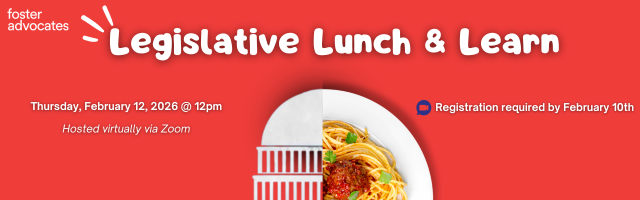
Please join us for our next Legislative Lunch & Learn on February 12, 2026
*Can’t make this time? Worry not, FA will be hosting more throughout the Legislative Session. Keep an eye on our socials and here for updates!

Foster Leaders! Save the Date for our Session Kick Off Event. Join us for coffee, tea and a light breakfast as we gear up for this legislative session!
February 10, 2025
9am - 11am
We are also supporting:
Foster Bill of Rights: Minnesota is one of only 5 states that does not have a foster youth bill of rights in statute, code, or agency policy. Led by the Ombuds Office for Foster Youth (OOFY), the goal of this bill is to provide a clear, consolidated bill of rights that ensures that everyone, in every county in Minnesota, is operating from the same standard to ensure clarity on the protections for young people who are often the most vulnerable.
Increased investment for the Successful Transitions to Adulthood for Youth (STAY) Program. This is the only state program that offers designated funds to counties and nonprofits to provide independent living services and financial support to eligible youth ages 14 up to age 23 in their transition to adulthood. As a state we have not increased our investment in nearly 20 years. This creates a significant gap and need for our community. .